

Plastic vs Wooden Chicken Coops: Which Is Better?
Last Updated: November 19, 2026
Quick Summary
Plastic and HPL chicken coops beat wooden ones on cleaning time, red mite resistance, lifespan and whole-life cost. A plastic or HPL coop wipes clean in under 30 minutes and has no gaps where red mite can settle, while timber rots, harbours mites and needs regular repainting. Choose timber only if you want a traditional look and accept the upkeep.
- Recycled plastic and HPL coops are rot-proof and maintenance-free, while timber needs treating or repainting regularly.
- The Easicoop Chalet L carries a 10-year warranty and an expected lifespan of 25-plus years.
- Nestera backs its House, Lodge and Penthouse models with a 25-year warranty.
- Nestera coops are made from 70% recycled plastic and are 100% recyclable.
- Nestera houses sit 27cm off the ground, lifting the coop clear of damp ground and improving airflow.
Table of Contents
- Plastic vs Wooden Chicken Coops: The Core Differences
- The Best Chicken Coop Material for Your Flock
- Why an HPL Chicken Coop Outlasts Timber
- Chicken Coop Red Mite Prevention: Material Matters
- How to Clean a Chicken Coop: Plastic vs Wood
- Thermal Comfort, Ventilation and Condensation
- Predator Security and Structural Safety
- Upfront Cost, Whole-Life Value and Repairability
- Environmental Impact and End-of-Life Considerations
- Choosing Your Coop with Chartley Chucks
- Frequently Asked Questions
Plastic vs Wooden Chicken Coops: The Core Differences
The choice between plastic vs wooden chicken coops for poultry keepers comes down to four things: cleaning time, parasite resistance, lifespan and whole-life cost. Plastic and HPL coops win on all four. Timber looks the part, but it rots, harbours red mite and needs repainting every couple of years.
Here at Chartley Chucks in Staffordshire, we supply both Nestera recycled plastic coops and Easicoop HPL models.
A plastic design can be cleaned, washed and dried in under 30 minutes, according to Guardian coverage of coop maintenance. A wooden coop of similar size takes far longer, because dirty water soaks into the grain and the house has to dry out before you can shut the birds in again.
Below, we break down each material honestly, including the cases where timber still makes sense.
The Best Chicken Coop Material for Your Flock
There is no single best chicken coop material for every keeper, but for most gardens the answer is recycled plastic or HPL. Both are rot-proof, easy to wipe down, and have no gaps where red mite can settle. Timber suits only keepers who want a traditional look and accept the maintenance that comes with it.
Easicoops have optional wood finish models to give a more traditional look.
How Recycled Plastic and HPL Compare to Timber
Recycled plastic is moulded into solid panels, so there are no joints for moisture or mites to exploit. HPL, or high-pressure laminate, is a dense, weather-resistant material. It wipes clean, resists frost and does not absorb odour.
Timber is a natural material with grain, movement and seams. Those seams open as the wood dries, and every one of them is a potential home for red mite. Wood also swells in wet weather and warps in heat.
Both plastic and HPL are genuinely maintenance-free. Timber is not: expect to treat or repaint it regularly to keep it weatherproof.
Why an HPL Chicken Coop Outlasts Timber
HPL and recycled plastic coops resist rot, warping and insect damage, while timber degrades over time when kept outdoors. The Easicoop Chalet L carries a 10-year warranty and an expected lifespan of 25-plus years. Nestera backs its House, Lodge and Penthouse models with a 25-year warranty.
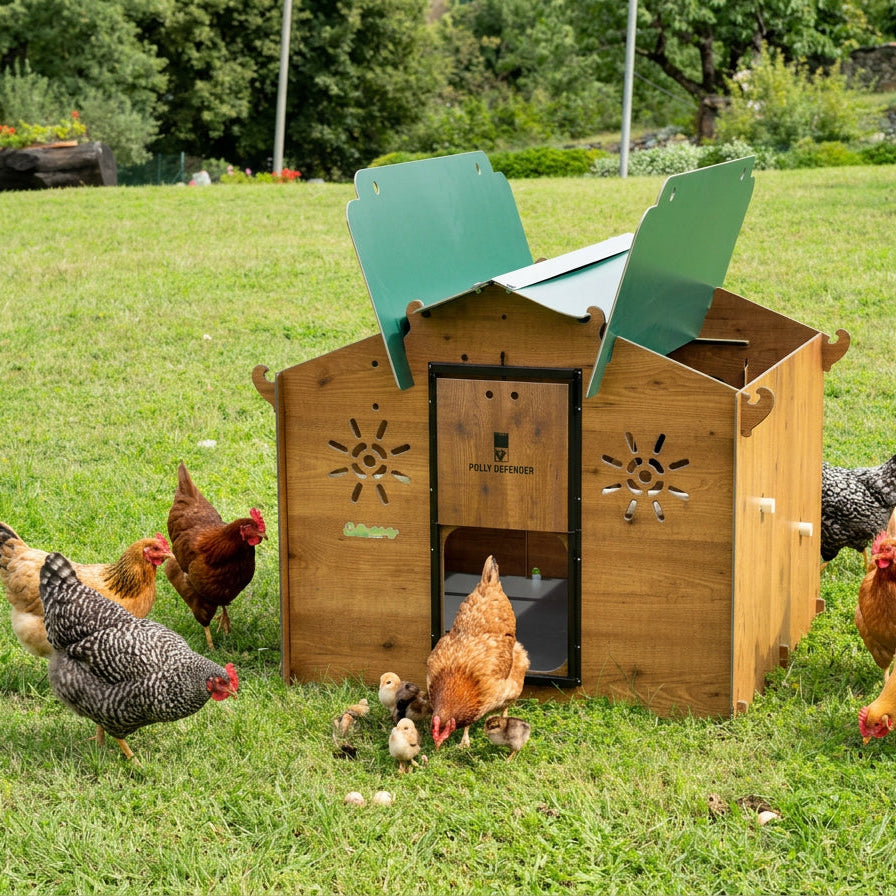
Timber's weakness is water. Rain sits in the grain, joints and the base, and rot sets in from the bottom up. Repainting buys time, but it does not stop the process.
If you want the full breakdown of how long each material really lasts, read our guide to plastic vs wooden chicken coops and which lasts longer.
Chicken Coop Red Mite Prevention: Material Matters
Chicken coop red mite prevention starts with the material you buy. Red mite hides in cracks, crevices and wood fibres, so a coop with no gaps has nowhere for the pest to establish. Plastic and HPL panels fit tightly together with no exposed timber, which removes the mite's habitat entirely.
Nestera's product documentation describes recycled plastic coops as red mite-resistant and maintenance-free compared with wooden alternatives. That matches what we hear from keepers who have battled infestations in timber houses for years.
With a smooth plastic or HPL surface, there are no gaps where red mites can retreat.
For a step-by-step routine, see our guide to preventing red mite in your chicken coop.
How to Clean a Chicken Coop: Plastic vs Wood
Learning how to clean a chicken coop is far easier with plastic or HPL. A Nestera or Easicoop house is quick to wipe down because droppings sit on a smooth surface rather than soaking into grain. A wooden coop needs scraping, scrubbing and a long drying window before the flock can go back in.
Daily Cleaning Routines and Drying Times
Daily cleaning in a plastic or HPL coop is a quick job. Slide out the droppings tray, rinse it, and the house is ready again. The Easicoop's listing gives a 20-minute deep clean and a two-minute disassembly.
Timber changes the routine completely. Droppings stick to rough boards, moisture works into the grain, and the house must dry fully before bedding goes back in. Damp bedding can encourage mould.
Our guide to easy-to-clean chicken coops shows which models genuinely save you time each week.
Thermal Comfort, Ventilation and Condensation
Plastic coops manage ventilation well, provided the vents are adjusted for the season. Both Nestera and Easicoop models have adjustable ventilation, and Nestera houses sit 27cm off the ground, which lifts the coop clear of damp ground and improves airflow underneath.
Solid wood can allow moisture to escape naturally, but only if the timber stays dry and well maintained; a neglected wooden coop can trap damp.
The practical answer is the same for both materials: keep vents open in all but the harshest weather, never block airflow to keep birds warm, and check for condensation on cold mornings. Chickens cope with cold far better than with a stuffy, humid house.
Predator Security and Structural Safety
Foxes test coops methodically, and the material matters less than the construction. A well-built plastic or HPL coop with a locking pop hole and solid panels holds up well, and the Easicoop's listing describes it as solid enough to withstand fox attacks. Timber coops weaken as they age, and a rotten panel or loose joint is exactly where a determined fox will work its way in.
Check three things on any coop: a locking pop hole, no gaps wider than a finger, and a solid floor or mesh base. Our guide to predator-proof chicken coops covers the details.
Upfront Cost, Whole-Life Value and Repairability
Timber coops usually cost less to buy, and that is their strongest argument. Plastic and HPL coops cost more upfront. Over the years, though, the gap closes fast, and the whole-life picture is where the two materials really diverge.
A timber coop needs wood treatment or repainting regularly, plus repairs as panels soften and joints open. Those costs are easy to overlook because they arrive in small amounts: a tin of wood preserver, a brush, a replacement panel, a tube of sealant. Add them up over a decade and the cheap coop stops looking cheap. A plastic or HPL coop needs neither treatment nor painting, and individual parts can be replaced if something does break. Nestera houses also hold a high second-hand value, which softens the initial outlay further.
Factor |
Recycled Plastic / HPL |
Timber |
|---|---|---|
Upfront cost |
Higher |
Lower |
Lifespan |
25+ years expected |
Noticeably shorter |
Red mite risk |
Very low |
High |
Cleaning time |
Minutes |
Long, with drying time |
Maintenance |
None |
Regular treatment |
Repairability |
Replaceable parts |
Patching and rebuilding |
Carbon footprint? |
Mainly recycled plastic materials, HPL is a wood pulp and resin mix |
99% imported from China via fuel oil burning ships |
Our range starts at £455 for the Nestera Medium House and rises to £895 for the Nestera Wagon, which houses up to 10 birds.
What Whole-Life Cost Actually Includes
A fair comparison counts more than the sticker price. For timber, budget for preservative or paint every couple of years, replacement of softened panels and base rails, and the bedding you lose when a damp house has to be stripped and dried out. For plastic and HPL, the ongoing cost is mostly bedding and the occasional replacement part. Neither material is free to run, but the timber column keeps growing while the plastic column stays flat.
Watch out: lifespan claims vary by product and by care. A sheltered plastic coop that is cleaned regularly will outlast one left in full sun with a blocked droppings tray, and a well-maintained timber coop can last longer than its reputation suggests. Treat any single figure as a guide, not a guarantee.
Repairability and Parts
Plastic and HPL coops are modular, so a damaged panel or latch can usually be swapped without replacing the whole house. Timber repairs tend to be cumulative: a patch here, a new base rail there, trays rot after a few years and eventually the frame itself. If you like to mend things yourself, both materials are workable, but only one of them stops needing attention once it is built. Our guide to easy-to-clean chicken coops also shows which models are easiest to take apart for repairs.
Environmental Impact and End-of-Life Considerations
Recycled plastic and HPL are the most eco-friendly coop materials available. Nestera coops are made from 70% recycled plastic and are 100% recyclable. HPL is dense and long-lasting, so one purchase serves for decades rather than a decade. That combination of recycled content, long life and recyclability is what separates these materials from the alternatives.
Timber looks greener than it is. Many wooden coops are manufactured overseas and shipped to the UK, using fuel in transit. A coop that then needs replacing after a few years carries a far heavier footprint than a single recycled plastic house that lasts a generation.
360 Research Reports on the poultry housing market projects the global chicken coop market growing at a CAGR of 5.9%, and demand is shifting toward recycled and long-life materials as keepers weigh whole-life impact.
Sourcing, Repair and Disposal
Most comparisons stop at recycled content, but the fuller picture covers where the material comes from, how long it stays in use and what happens at the end. Recycled plastic diverts waste from landfill and can be recycled again when the coop finally retires. HPL is dense and durable, so its impact is spread over a very long service life. Timber can be a good material in principle, but only when it is sourced responsibly and kept in use for many years; a short-lived, imported coop undercuts both advantages.
Repair matters as much as recycling. A coop that can be repaired and kept in service has a lower impact than one that is replaced. Plastic and HPL designs with replaceable parts support that, while timber repairs often delay rather than prevent replacement.
Watch out: 'eco-friendly' is a broad claim. Ask what proportion is recycled, whether the product is recyclable at end of life, and how long the manufacturer expects it to last. Those three questions separate a genuine whole-life benefit from a marketing line.
For keepers weighing the full picture, our guide to plastic vs wooden chicken coops and which lasts longer sets lifespan against material sourcing.
Choosing Your Coop with Chartley Chucks
Matching the coop to your flock and garden is the last decision, and the easiest one. Small flocks of up to five birds suit the Nestera Medium Lodge at £465, with 5 sq ft of roosting space, two nest boxes and two perches. For seven to nine birds, the Easicoop Chalet L at £490 gives 8.5 sq ft of perching space and a flip-up roof.
The Nestera Large Lodge at £525 houses 7-8 large fowl or up to 15 bantams. We deliver across the UK, and collection from Staffordshire is free.
Compare the full plastic poultry house range side by side before you decide.
The hardest part is not choosing between plastic and wood. It is accepting that the cheaper timber house will cost you more in cleaning, treatment and replacement over the years. We supply Nestera recycled plastic and Easicoop HPL coops, both built to last decades, with free collection from Staffordshire and UK-wide delivery. Get started with Chartley Chucks and give your flock a house that stays clean, dry and mite-free.
Frequently Asked Questions
Are plastic chicken coops better than wooden ones?
For most keepers, yes. Plastic and HPL coops are easier to clean, resist red mite and last far longer. A Nestera coop carries a 25-year warranty and cleans in about five minutes, while wooden coops need regular treatment and often warp or rot within a few years. Wood wins on traditional appearance, but plastic wins on hygiene, lifespan and day-to-day effort.
Are plastic chicken coops resistant to red mites?
Recycled plastic and HPL coops have smooth surfaces with no cracks, joins or wood fibres where red mites can shelter. That makes chicken coop red mite prevention far simpler, because there are fewer hiding places for the pests. Wooden coops develop gaps and splits over time, which is exactly where infestations take hold. Pair a plastic coop with regular cleaning for the best protection.
How long do plastic and wooden chicken coops last?
A Nestera plastic coop comes with a 25-year warranty, and the Easicoop HPL range offers a 10-year warranty with a 25-year expected lifespan. Timber is prone to rot, warping and pest damage, while the plastic and HPL options are designed to resist these.
Are wooden chicken coops environmentally friendly?
Less than you might expect. Wooden coops are often shipped long distances, which adds to their environmental footprint. Recycled plastic and HPL coops, such as the Nestera and Easicoop ranges stocked by Chartley Chucks in Staffordshire, use recycled or long-life materials and are fully recyclable at the end of their service.
Prices of Nestera and Easicoop chicken coop models
Frequently Asked Questions
Are plastic chicken coops better than wooden ones?
For most keepers, yes. Plastic and HPL coops are easier to clean, resist red mite and last far longer. A Nestera coop carries a 25-year warranty and cleans in about five minutes, while wooden coops need regular treatment and often warp or rot within a few years. Wood wins on traditional appearance, but plastic wins on hygiene, lifespan and day-to-day effort.
Are plastic chicken coops resistant to red mites?
Recycled plastic and HPL coops have smooth surfaces with no cracks, joins or wood fibres where red mites can shelter. That makes chicken coop red mite prevention far simpler, because there are fewer hiding places for the pests. Wooden coops develop gaps and splits over time, which is exactly where infestations take hold. Pair a plastic coop with regular cleaning for the best protection.
How long do plastic and wooden chicken coops last?
A Nestera plastic coop comes with a 25-year warranty, and the Easicoop HPL range offers a 10-year warranty with a 25-year expected lifespan. Timber is prone to rot, warping and pest damage, while the plastic and HPL options are designed to resist these.
Are wooden chicken coops environmentally friendly?
Less than you might expect. Wooden coops are often shipped long distances, which adds to their environmental footprint. Recycled plastic and HPL coops, such as the Nestera and Easicoop ranges stocked by Chartley Chucks in Staffordshire, use recycled or long-life materials and are fully recyclable at the end of their service.

