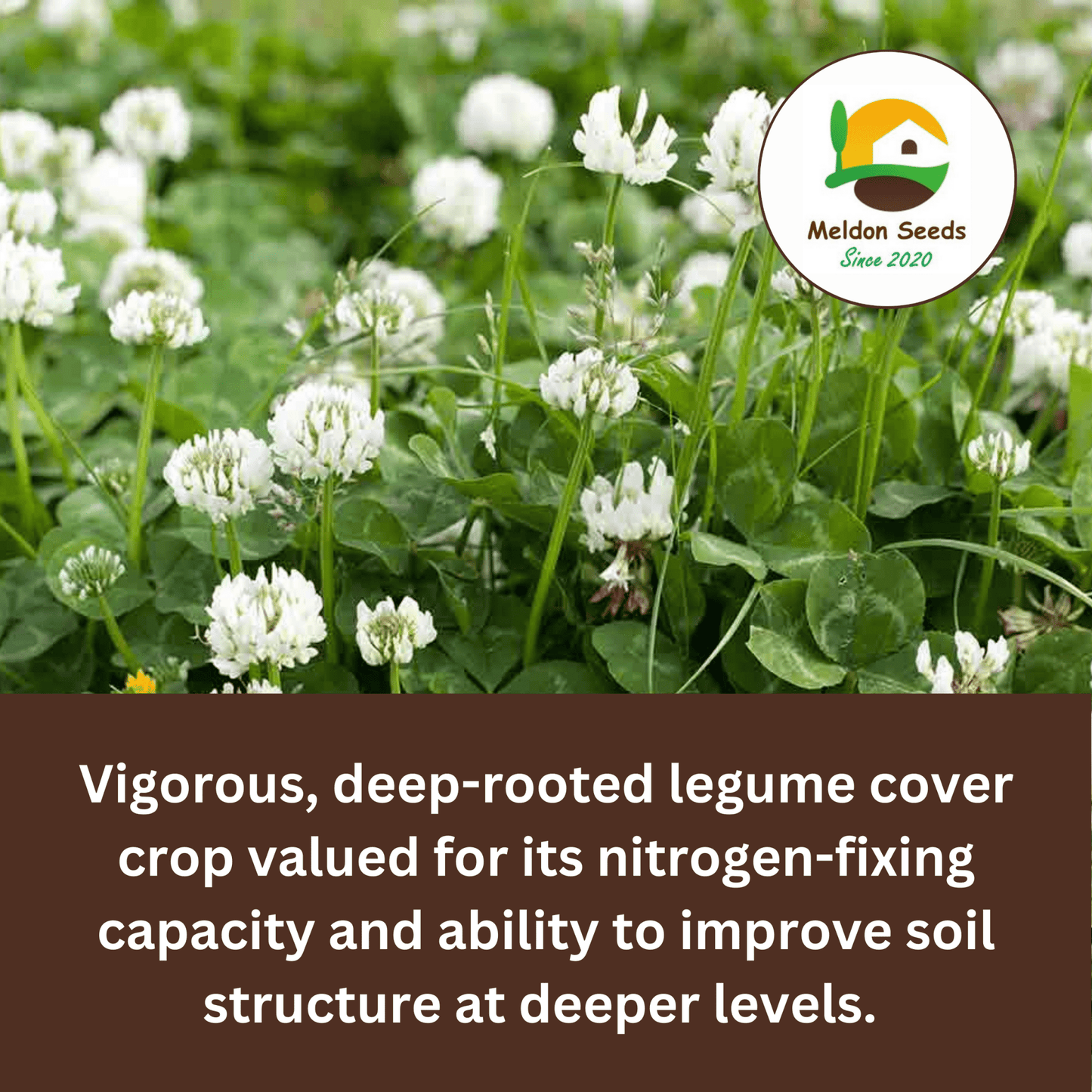


White Clover Green Manure Seeds - 500g
White Clover Green Manure Seeds - 500g
Couldn't load pickup availability
Meldon Seeds - White Clover Green Manure Seeds
Packet size - 500g
Meldon Seeds White Clover Green Manure Seeds produce a low-growing, long-lived legume cover crop prized for its ability to fix nitrogen, improve soil structure, and provide durable ground cover. White clover forms a dense, spreading mat that suppresses weeds, reduces erosion, and continuously enriches the soil through natural nitrogen fixation.
Unlike short-term cover crops, white clover is well suited for permanent or semi-permanent plantings in gardens, orchards, pathways, and between crop rows. Its tolerance for mowing and foot traffic makes it especially useful in living mulch systems. In addition to its soil-building benefits, white clover attracts pollinators and beneficial insects throughout the growing season.
Key Benefits
-
Fixes atmospheric nitrogen and improves soil fertility
-
Forms dense, weed-suppressing ground cover
-
Reduces erosion and improves soil structure
-
Excellent living mulch or long-term cover crop
-
Tolerates mowing and light foot traffic
-
Attracts pollinators and beneficial insects
How to Use White Clover as a Green Manure or Living Mulch
1. When to Plant
-
Spring: Sow as soon as soil can be worked.
-
Late summer to early autumn: Plant 6–8 weeks before first frost.
-
White clover is cold-hardy and can overwinter in most climates.
2. Soil Preparation
-
Remove existing weeds or competing vegetation.
-
Lightly cultivate or rake the soil to create a smooth, firm seedbed.
-
White clover prefers well-drained soils but adapts to many soil types.
3. Seeding Rate
-
Gardens: Broadcast at approximately 225 g per 100 sq metres.
-
Lightly rake seeds into the soil ⅛–¼ inch deep and firm the soil to ensure good seed contact.
4. Watering
-
Water gently after planting if rainfall is not expected.
-
Keep soil consistently moist until seedlings are established.
5. Growth & Management
-
White clover establishes relatively slowly compared to annual cover crops.
-
Once established, it spreads by runners and forms a persistent, low-growing cover.
-
Mow or trim as needed to manage height or reduce competition with nearby crops.
6. Termination & Incorporation (Optional)
-
For green manure use, mow or till clover into the soil before flowering for faster decomposition.
-
Allow 2–3 weeks for plant material to break down before planting the next crop.
-
For living mulch systems, clover may be left in place and managed by mowing.
Tips for Best Results
-
Use a legume inoculant if clover has not been grown in the area previously to maximize nitrogen fixation.
-
Avoid planting in overly dry or compacted soils during establishment.
-
Especially effective in orchards, perennial beds, and between raised beds.