

Flyte so Fancy Alternatives for Coops: 2026 Guide
Table of Contents
- Flyte so Fancy Alternatives for Coops: What to Compare First
- Plastic Chicken Coops: Low Maintenance and Mite-Resistant
- Wooden Chicken Coops: Traditional Look, More Upkeep
- Frequently Asked Questions
Last Updated: 12 October 2026
Flyte so Fancy Alternatives for Coops: What to Compare First
If you're searching for Flyte so Fancy alternatives for coops, the single most useful decision you'll make is material: plastic or wood. Get that right and everything else, size, ventilation, cleaning routine, falls into place. This guide from Chartley Chucks breaks down what actually matters when you're comparing coops, so you can pick housing that suits your garden and your flock.
The two categories most keepers weigh up are plastic chicken coops and wooden chicken coops. Each has real strengths. We'll cover both, plus the red mite problem that drives many people away from timber in the first place.
Priority |
Better Choice |
Why |
|---|---|---|
Low maintenance |
Plastic |
No treatment, wipe-clean surfaces |
Red mite resistance |
Plastic |
No crevices to harbour mites |
Traditional look |
Wood or wood finish Easicoops |
Blends into a cottage garden |
Budget entry point |
Wood |
Lower upfront cost |
Long-term value |
Plastic |
25-year lifespans are common |
Plastic Chicken Coops: Low Maintenance and Mite-Resistant
Plastic chicken coops are the low-maintenance choice for keepers who want easy cleaning and strong resistance to red mite. Because they have no timber joints or gaps, there are far fewer places for mites to hide.
We stock several plastic options at Chartley Chucks. The Easicoop Eco HPL suits around five medium birds and is built from the same high-performance laminate used on institutional buildings. The Easicoop Chalet L takes up to nine hybrid birds with two nest boxes and dual perches. For larger flocks, the Easicoop Chalet 2XL houses up to eighteen birds.
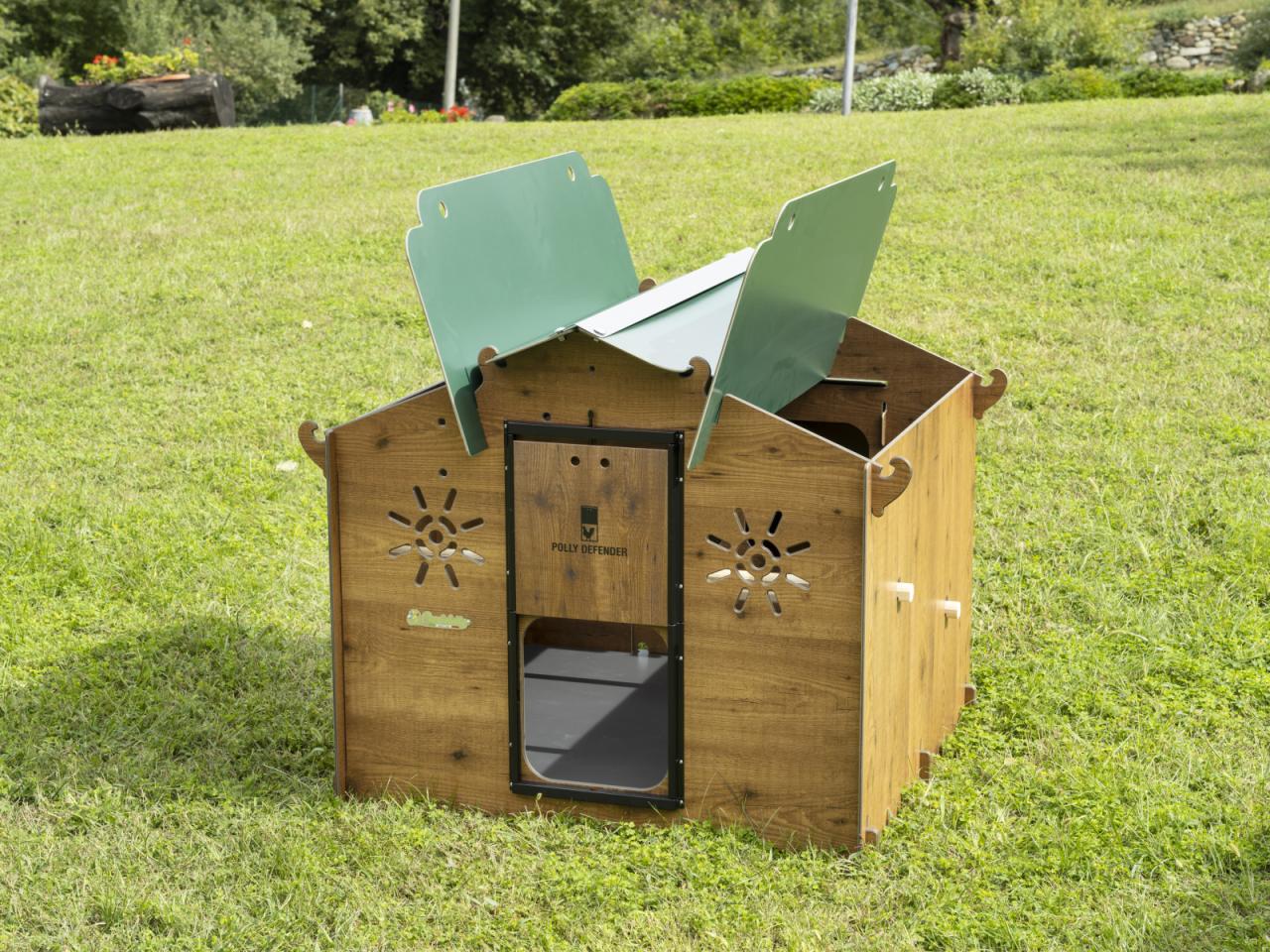
Easicoop Chalet L chicken coop 7-9 medium sized birds (Wood Finish)
Most plastic coops need no annual treatment. A wipe-down with disinfectant is usually enough.
Wooden Chicken Coops: Traditional Look, More Upkeep
Wooden chicken coops give you the classic look many keepers want, but they demand more from you. Timber needs regular treatment and inspection for red mite, which thrives in the cracks and joints of wooden housing.
If you go wooden, prioritise a coop with a raised floor, good ventilation, and a locking pop hole. A predator-proof chicken coop matters too: foxes are persistent, so latches and mesh need to be sound.
Easicoop Chalet L - HPL Chicken coop up to 7-9 medium Birds →
A chicken coop size guide helps here. Allow roughly one bird per two square feet of internal space, and size up rather than down. A coop rated for six birds is a sensible fit for four, giving your flock room to move.
If you're weighing up which coop suits your set-up, our team at Chartley Chucks in Staffordshire offers advice on keeping and care of chickens with a 30-minute chat.
RSPCA guidance on keeping chickens
Frequently Asked Questions
What should I compare when choosing a chicken coop supplier?
Focus on four things: the material (HPL or recycled plastic resist red mite better than wood), the internal perching space in square feet, whether the pop hole takes an automatic door opener, and the warranty length. Chartley Chucks, based in Staffordshire, stocks Easicoop and Nestera coops with 10 to 25-year warranties, free collection, and UK-wide pallet delivery from £65.
What size coop do I need for my flock?
Allow roughly 1 square foot of internal perching space per hybrid bird. A small coop such as the Easicoop Eco HPL (£325) suits 5 to 6 birds, while the Easicoop Chalet 4XL (£1,169) houses 15 to 20. Bantams need less room, so a 5-bird coop can often take up to 10 small bantams. Always size up if you plan to add birds later.
What features make a chicken coop predator-resistant?
Look for bite-proof panels, a locking pop hole, and no gaps wider than a finger. HPL and recycled plastic coops have no crevices for foxes or rats to exploit and resist being chewed. Fitting an automatic door opener, such as Chicken Guard, adds a further layer by closing the pop hole at dusk, which is when most fox attacks happen.
Choosing between plastic and wood comes down to how much upkeep you want and how badly red mite has burned you before. At Chartley Chucks, we're agents for Nestera and Easicoop coops, and we offer free collection from Staffordshire alongside delivery across the UK. Our plastic range gives you mite-resistant, maintenance-free housing backed by warranties of up to 25 years. Get started with Chartley Chucks and house your flock with confidence.
